The 5 Pillars of Islam Explained
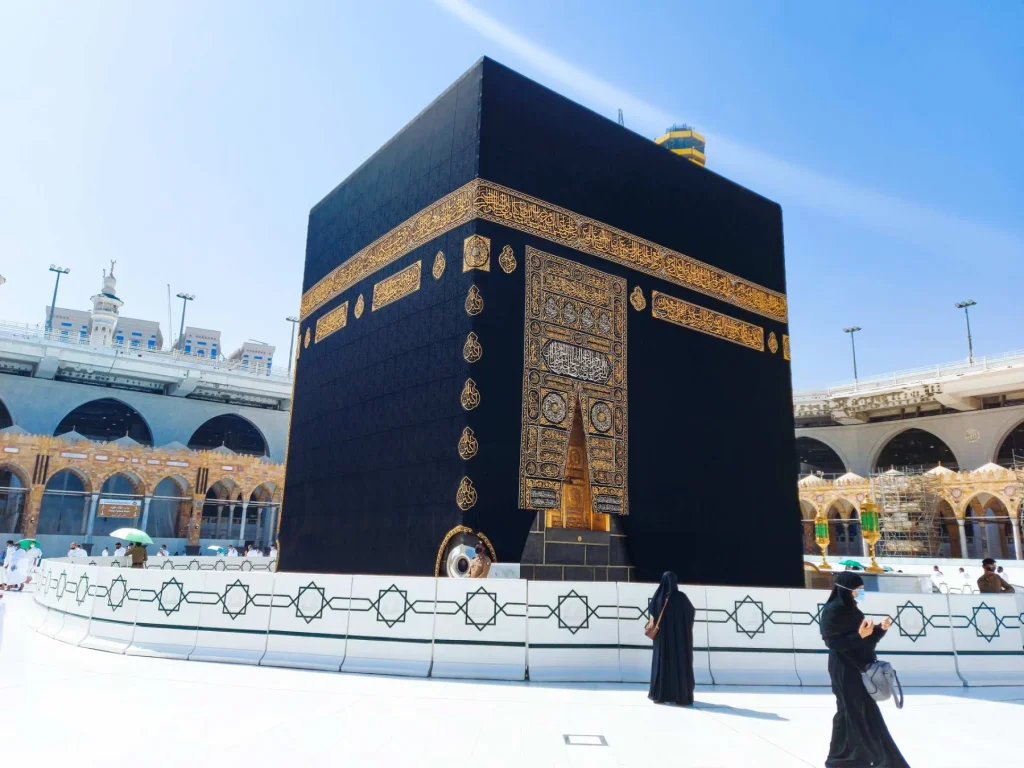
The five pillars are the core acts of worship that structure a Muslim’s practice of Islam. They’re often introduced to children early on, in simple terms, and then understood more deeply as an adult — but the basic framework itself is straightforward enough to explain clearly in a few paragraphs each.
1. Shahada — the declaration of faith
The Shahada is the testimony that there is no god but God, and that Muhammad is His messenger. It’s the foundational statement of belief in Islam — sincerely declaring it is what makes someone a Muslim, and it’s repeated within the daily prayers as well, which means it isn’t a one-time statement so much as a belief a Muslim affirms continually throughout life.
2. Salah — the five daily prayers
Salah is the ritual prayer performed five times a day, at set times tied to the position of the sun: dawn (Fajr), midday (Dhuhr), afternoon (Asr), sunset (Maghrib) and night (Isha). Each prayer follows a set sequence of standing, bowing and prostration, accompanied by specific recitations, including Al-Fatiha in every unit. Salah is generally described as the direct link between a worshipper and God, performed at set times throughout the day rather than saved for a single occasion — which is part of why establishing it as a habit, especially in children, is treated as such a priority in Muslim households.
3. Zakat — obligatory charity
Zakat is a fixed portion of a Muslim’s savings and qualifying wealth, given annually to specific categories of people in need. It isn’t voluntary in the way general charity is — it’s a required act of worship in its own right, calculated according to set rules, and its purpose is understood as both purifying wealth and redistributing it within the community. Zakat is separate from Sadaqah, which refers to voluntary giving beyond the obligatory amount.
4. Sawm — fasting in Ramadan
Sawm is fasting during the month of Ramadan, from dawn until sunset, abstaining from food, drink and other specific things during daylight hours. Beyond the physical discipline, it’s described as building self-restraint and awareness, and as a period during which many Muslims also increase their reading of the Quran and their charitable giving. Certain groups — including the ill, travelers, and others under specific conditions — are exempted or given alternatives, reflecting that the obligation is meant to be sustainable, not harmful.
5. Hajj — pilgrimage to Mecca
Hajj is the pilgrimage to Mecca, required once in a lifetime for Muslims who are physically and financially able to undertake it. It takes place during a specific set of days in the Islamic calendar and involves a defined sequence of rites performed in and around the city, tracing back to the actions of the Prophet Ibrahim and his family. Because it’s conditional on physical and financial ability, not every Muslim will perform Hajj, but it remains one of the five foundational pillars precisely because of what it represents: a shared, once-in-a-lifetime act uniting Muslims from every background in the same place.
How the five fit together
It’s worth noticing that the five pillars aren’t five unrelated obligations — they move outward from belief, to daily practice, to wealth, to self-discipline, to a shared communal act. Shahada establishes what a Muslim believes; Salah structures daily life around that belief; Zakat extends it into how wealth is handled; Sawm builds the self-discipline to sustain all of it; and Hajj, for those able to undertake it, brings the whole practice together in one shared act performed alongside millions of others.
Teaching the pillars to children
Most children first encounter the five pillars as a simple list to memorize, usually alongside learning the six articles of faith. That’s a reasonable starting point, but it’s worth revisiting the explanations as a child gets older — the reasoning behind each pillar tends to matter more for genuine understanding than being able to recite the list in order, and a good teacher will usually circle back to explain that reasoning rather than treating memorization of the names as the finish line.
If you’re looking for a structured way to build this kind of understanding alongside Quran reading itself, Easy Quran Classes offers a free trial class to see how a teacher approaches this with your child or with you directly.