A Complete Guide to Noorani Qaida
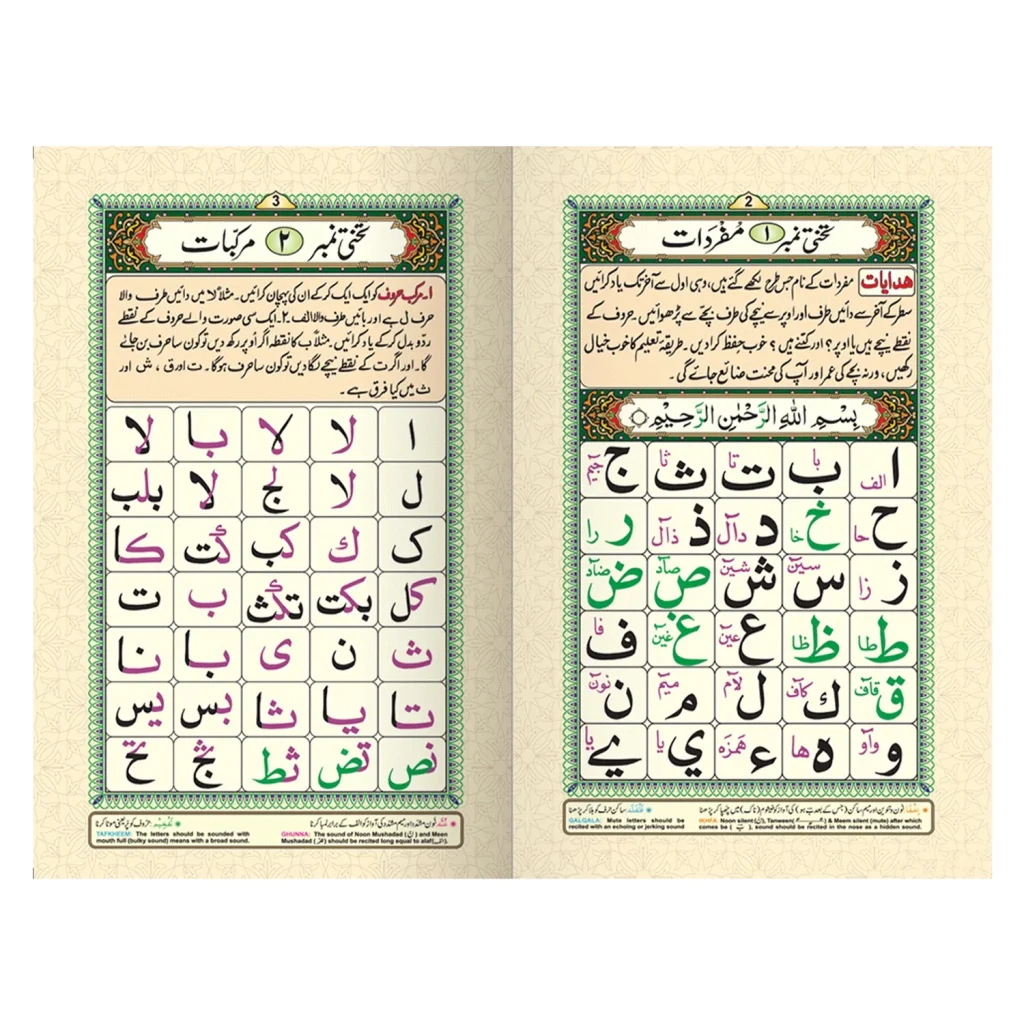
Long before a student opens a full mus’haf, most Quran-teaching traditions start somewhere much smaller: a short primer usually called the Noorani Qaida. It’s not a part of the Quran itself — it’s a teaching tool, a sequence of lessons designed specifically to get a complete beginner from not recognizing Arabic letters at all to reading connected Quranic text with reasonable accuracy, and it’s been used in Quran schools for generations because, frankly, it still works better than most modern alternatives.
Why start with a separate book instead of the Quran directly
Arabic script behaves differently from most languages a new student is likely to already read. Letters change shape depending on where they sit in a word, several letters look nearly identical and are distinguished only by dots, and vowels are usually marked with small symbols above or below a letter rather than written out as full characters. Throwing a complete beginner straight into a page of the Quran, with all of this happening at once alongside actual Quranic content, tends to overwhelm rather than teach. The Qaida strips all of that down to one skill at a time.
How the lessons are structured
The Qaida moves in a deliberate sequence, and skipping ahead usually causes more problems than it solves:
- Individual letter shapes. The twenty-nine letters of the Arabic alphabet, first in isolation, then in their different forms depending on position within a word.
- Short vowels (harakat). Fatha, kasra and damma — the marks that turn a bare consonant into a pronounceable syllable — introduced one at a time and then combined.
- Joined letters. Once single letters and their vowels are solid, the Qaida introduces letters connected into short words, which is where a student’s reading actually starts to look like reading rather than naming individual symbols.
- Tanween. The double-vowel endings that add an “n” sound to the end of a word, practiced separately since they’re easy to confuse with plain short vowels at first.
- Sukoon and shaddah. The absence of a vowel, and the doubling mark that holds a letter for slightly longer — both change how a word sounds and both need dedicated practice to become automatic.
- Madd letters and elongation. A first, simplified introduction to holding certain vowel sounds longer, which is the foundation the fuller Tajweed rules build on later.
- Connected reading practice. Short practice lines and eventually full connected text, applying everything from the earlier lessons together.
Each stage builds directly on the one before it, which is exactly why rushing through the Qaida tends to backfire. A student who moves on before a stage is genuinely solid usually carries a small gap forward, and that gap tends to resurface later as a stubborn, harder-to-fix habit once real Quranic recitation is involved.
Who the Qaida is for
It’s most strongly associated with young children starting their Quran education, and that’s genuinely its most common use — but it’s just as useful for an adult beginner with no prior Arabic reading ability, or for an adult who technically learned to read as a child but never built a solid foundation and wants to go back and do it properly. Age doesn’t change what the book is teaching; it just changes the pace and the examples a good teacher will use to explain it.
What comes after
Finishing the Qaida doesn’t mean Tajweed is finished — it means the basic mechanics of reading Arabic script are now solid enough to layer the fuller Tajweed rules, like the Noon Sakinah rules or the different categories of madd, on top of, in the actual context of Quranic verses rather than isolated practice lines. Students sometimes expect to move straight from finishing the Qaida into memorizing large amounts of Quran; in practice, a short transition period reading connected Quranic text with a teacher, applying Tajweed consciously rather than automatically, makes that jump much smoother.
Why a teacher matters even for something this basic
It might seem like a beginner’s primer wouldn’t need much correction, but the opposite is often true. Because every later stage builds on the ones before it, a small mispronunciation of a single letter shape at the very start of the Qaida can quietly repeat itself through every following lesson. A teacher listening in real time catches this in the first week rather than the fiftieth page, which is a large part of why a structured class tends to outperform working through the same book alone.
Easy Quran Classes offers a free trial class if you’d like a teacher to assess where a complete beginner — child or adult — should actually start.